ACE COURTS / ARTICLES & GUIDES
Post-Tension vs. Rebar Concrete for Sport Courts in Utah
Compare how post-tension and rebar concrete manage cracking, joints, and site conditions, and learn what to include when comparing Utah sport-court proposals.
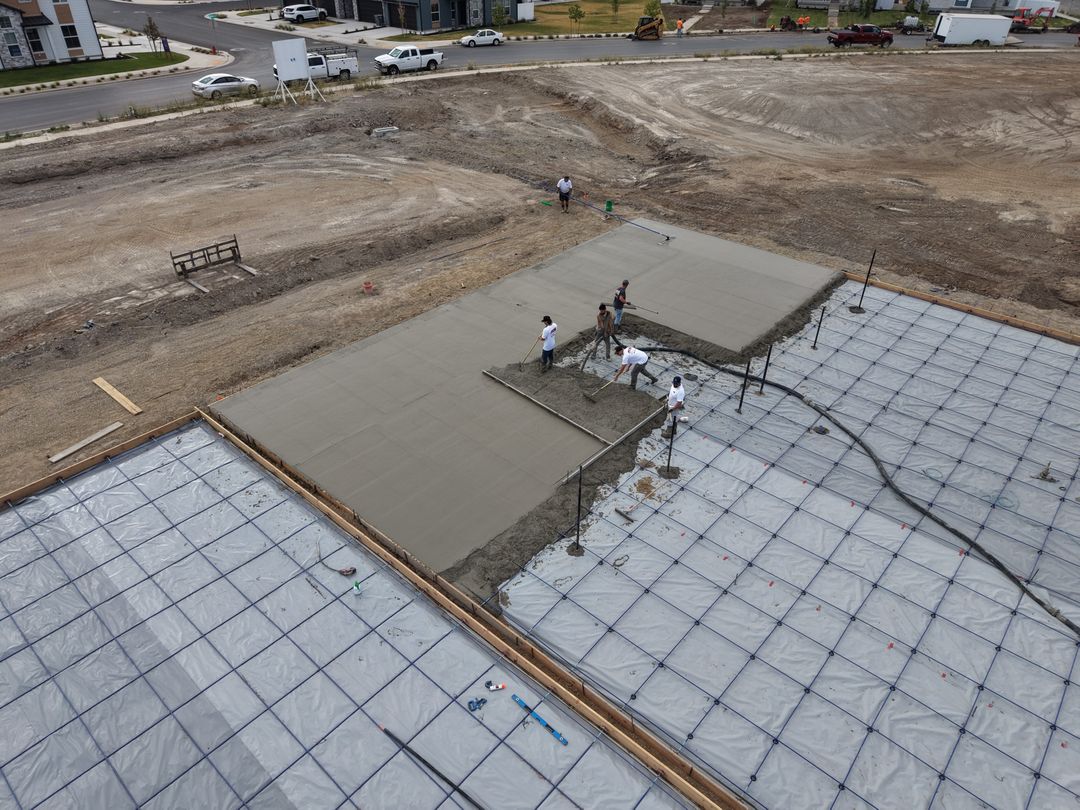
The concrete beneath a sport court affects more than how the court looks on opening day. Its design influences cracking, joint locations, future repairs, and the surface you will play on. When comparing post-tension concrete with conventional rebar concrete, the useful question is how each complete slab system fits your property and priorities.
Post-tensioning actively compresses the concrete. Conventional rebar reinforces the slab and helps control crack openings. Neither description, by itself, tells you whether a proposal includes the right site preparation, drainage, construction details, or court surfacing.
What is the difference between post-tension and rebar concrete?
Post-tension concrete uses active compression
A post-tension slab contains high-strength steel tendons that are stressed after the concrete has gained the required strength. That process places the concrete in compression, helping it resist stresses that would otherwise pull it apart.
For sport courts, this approach can help manage cracking and reduce the number of planned joints interrupting the playing area. The Post-Tensioning Institute's sport-court discussions explain those benefits alongside the importance of design, installation, and subgrade preparation. Explore ACE Courts' post-tension concrete service for more about this construction option.
Conventional rebar helps control crack openings
Rebar is reinforcing steel placed within the concrete. Unlike stressed tendons, conventional bars do not deliberately compress the slab. They help the concrete resist tensile forces and control the opening of cracks that develop.
The American Concrete Institute's guidance on reinforcing bars in slabs on ground identifies crack-width control as their general purpose. Bar placement, the amount of reinforcement, and the joint design must work together. A proposal described only as “reinforced concrete” leaves important questions unanswered.
Why joints matter on a playing surface
Conventional slabs commonly use planned contraction joints to help manage where shrinkage-related cracking occurs. On a court, the location of those joints deserves attention because players need a consistent surface across the space where they move and the ball bounces.
A post-tension court can often be designed with fewer contraction joints. That is a practical reason to consider it for pickleball, basketball, tennis, and multi-sport layouts. It does not mean every post-tension project has no joints. The footprint, slab design, surrounding construction, and placement sequence still matter.
When comparing drawings, look at the actual playing area. A clear joint plan is more useful than a broad promise that one reinforcement method is always better.
Does post-tension concrete prevent all cracking?
No. Post-tensioning is a way to manage stress and cracking, not a guarantee of permanently crack-free concrete. The Post-Tensioning Institute's technical note on ground-supported slabs discusses cracks that can occur in post-tension construction.
Conventional rebar is not a crack-free guarantee either. A useful proposal explains the intended performance, construction process, maintenance expectations, and warranty coverage. If a crack develops later, its cause, movement, and effect on the playing surface determine the appropriate response.
Also, “post-tension versus rebar” is convenient shorthand rather than a claim that the materials can never appear together. A post-tension design may include conventional reinforcing steel in particular details.
The Utah site deserves as much attention as the steel
A slab depends on the ground beneath it. The Utah Geological Survey identifies expansive soils that change volume with moisture and collapsible soils that can settle when wetted. Those conditions are reasons to evaluate the actual property, rather than assume every yard in a county behaves alike.
For projects in Utah County, Salt Lake County, and Washington County, site planning should account for soil conditions, prepared support, drainage, and water arriving from nearby landscaping. Reinforcement cannot replace appropriate preparation or a plan for moving water away from the court.
Compare that groundwork alongside the slab itself. ACE Courts' full court construction service brings the site work and finished court into the same project conversation.
Compare the complete court, not just the concrete label
There is no useful universal price premium or lifespan promise that applies to every backyard. Size, access, earthwork, design, materials, and finishing all change the scope. The American Sports Builders Association's concrete guidance likewise recognizes the importance of climate, geotechnical conditions, construction methods, and regional materials.
Put competing proposals side by side using these categories:
- Site and drainage: excavation, prepared base, grades, and runoff management.
- Slab design: reinforcement, joint locations, construction details, and responsibility for the design.
- Installation: concrete placement, finishing, curing, and the required inspection or testing.
- Finished surface: the named coating or cushion system, colors, lines, and preparation included.
- Ownership: maintenance guidance, repair responsibilities, and written warranty terms.
This comparison makes differences in scope visible before a lower headline price becomes the deciding factor.
Concrete reinforcement and court cushioning are separate choices
Post-tension and rebar describe the supporting slab. The coating and any cushion layers sit above it. Choosing a slab does not settle how you want the finished court to feel underfoot.
ACE Courts uses CushionX for cushioned court projects. Read our guide to CushionX cushioned court benefits to compare that surface option. A cushion system is not a substitute for addressing structural movement or an unsuitable base.
Plan equipment and future changes early
Include hoop, net-post, and other equipment locations in the original layout. Later drilling or cutting into a post-tension slab requires qualified review and tendon location. PTI's guidance on repairs and modifications explains how coring can damage tendons and why locating them matters.
Use the ACE Courts court designer to explore dimensions, sports, colors, and layouts before discussing construction details.
Plan your Utah sport court with ACE Courts
ACE Courts is based in Eagle Mountain, Utah, and serves Utah County, Salt Lake County, and Washington County. One Company from the ground up. No subcontractors. Our crews handle the construction, with a coordinated approach from site preparation through the finished court.
Contact ACE Courts to review your property, compare slab options, and plan the playing surface that fits your project.
Turn your research into a court plan.
Share your location, intended sports and a few photos. Our team can help you work out the next step.
Discuss your court